
Introdução
Thank you for choosing the Amazon Basics Vacuum Sealer Machine. This manual provides essential information for the safe and efficient operation, maintenance, and troubleshooting of your new appliance. Please read these instructions thoroughly before first use and retain them for future reference.
This vacuum sealer is designed to preserve food by removing air from specially designed bags, extending freshness and flavor. It is also suitable for preparing food for sous vide cooking and protecting non-food items from moisture and air.
Instruções importantes de segurança
- Leia todas as instruções antes de usar.
- Não mergulhe o aparelho, o cabo de alimentação ou a ficha em água ou outros líquidos.
- Este aparelho não se destina ao uso por pessoas (incluindo crianças) com capacidades físicas, sensoriais ou mentais reduzidas, ou com falta de experiência e conhecimento, a menos que tenham recebido supervisão ou instruções sobre o uso do aparelho de uma pessoa responsável pela sua segurança.
- As crianças devem ser supervisionadas para garantir que não brinquem com o aparelho.
- Desligue da tomada quando não estiver em uso e antes de limpar. Deixe esfriar antes de colocar ou retirar peças e antes de limpar o aparelho.
- Não opere nenhum aparelho com o cabo ou plugue danificado ou após o aparelho apresentar mau funcionamento ou ter sido danificado de qualquer forma.
- A fita de vedação aquece durante o funcionamento. Evite o contato direto.
- Use only Amazon Basics vacuum sealer bags or rolls designed for this appliance.
- Este aparelho é somente para uso doméstico. Não use ao ar livre.
Produto acimaview
Familiarize yourself with the components of your vacuum sealer.
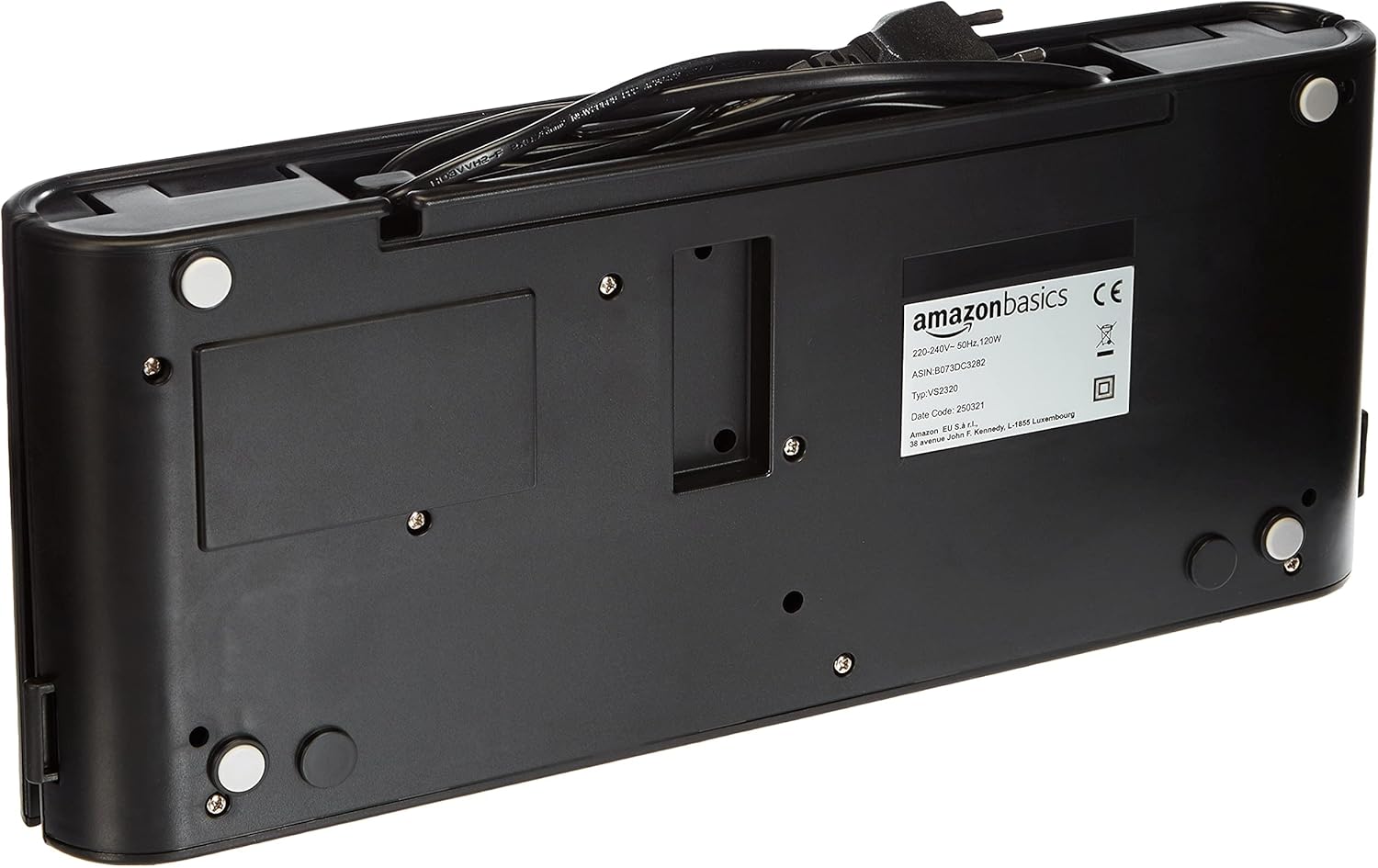
Imagem 1: Principal view of the Amazon Basics Vacuum Sealer Machine. This image shows the sleek black design of the appliance with its control panel visible on the top surface.

Imagem 2: Interior view of the Amazon Basics Vacuum Sealer Machine with the lid open. This image highlights the vacuum channel, sealing strip, and foam gaskets.

Imagem 3: Close-up of the control panel on the Amazon Basics Vacuum Sealer Machine. Buttons for Dry, Moist, Pulse Vacuum, Seal, Vacuum & Seal, and Cancel are clearly visible.
Componentes principais:
- Painel de controle: Buttons for various sealing modes (Dry, Moist, Pulse Vacuum, Seal, Vacuum & Seal, Cancel).
- Canal de vácuo: Área por onde o ar é extraído da bolsa.
- Fita selante: Heats up to create an airtight seal.
- Juntas: Create a vacuum chamber seal.
- Fechos da tampa: Mantenha a tampa segura durante o funcionamento.
- Integrated Bag Cutter: For custom-sized bags from rolls.
- Porta acessória: For external vacuuming of canisters (accessory hose not included).
Configurar
- Desembale o aparelho: Retire cuidadosamente a seladora a vácuo da embalagem. Guarde a embalagem para armazenamento ou transporte futuro.
- Inspecione quanto a danos: Verifique se o aparelho apresenta sinais de danos. Não o utilize se estiver danificado.
- Limpe o aparelho: Limpe o exterior com adamp pano. Certifique-se de que a fita de vedação e o canal de vácuo estejam limpos e secos.
- Posicione o aparelho: Place the vacuum sealer on a flat, stable, and dry surface. Ensure there is enough space around it for operation.
- Conexão de energia: Plug the power cord into a standard electrical outlet. The appliance is ready for use.
- Armazenamento do cabo: The appliance features integrated cord storage on the underside for neat organization.

Imagem 4: Underside of the Amazon Basics Vacuum Sealer Machine, showing the power cord neatly stored in the integrated compartment.
Instruções de operação
This section details how to use your vacuum sealer for various food types and sealing needs.
Preparing Bags:
- Use only compatible vacuum sealer bags or rolls.
- When using a roll, pull out the desired length and use the integrated cutter to create a bag. Seal one end using the "Seal" function before filling.
- Leave at least 7-10 cm (3-4 inches) of space between the food and the top of the bag to ensure a proper seal.
- Ensure the inside of the bag near the sealing area is clean and dry. Moisture or food particles can prevent a proper seal.
Selagem a vácuo de alimentos:
- Coloque a comida na sacola: Put the food item into the vacuum sealer bag.
- Posicione a bolsa: Open the lid of the vacuum sealer. Place the open end of the bag into the vacuum channel, ensuring it lies flat and smooth over the sealing strip. The bag opening should be fully inside the vacuum channel.
- Feche a tampa: Press down firmly on both sides of the lid until you hear a click, indicating it is securely latched.
- Modo de seleção:
- Modo Seco: For dry food items. Press the "Vacuum & Seal" button. The machine will automatically vacuum the air and then seal the bag.
- Modo Úmido: For moist or liquid-rich food items. Press the "Moist" button, then "Vacuum & Seal". This mode adjusts the vacuum pressure and sealing time for better results with moist foods.
- Vácuo pulsado: For delicate foods (e.g., bread, chips) where full vacuum might crush them. Press and hold "Pulse Vacuum" to manually control the vacuum process. Release the button when the desired vacuum level is reached, then press "Seal" to seal the bag.
- Selo apenas: To create a seal without vacuuming (e.g., for making bags from a roll, or resealing bags). Place the bag end over the sealing strip and press "Seal".
- Monitorar Processo: The machine will indicate when the process is complete (e.g., indicator light turns off).
- Liberar e remover: Press the release buttons (if present, or lift the lid firmly) to open the lid. Remove the sealed bag.

Imagem 5: A visual step-by-step guide demonstrating the process of preparing a bag, placing it in the vacuum sealer, and initiating the vacuum and seal process. This collage shows the bag cutter, bag placement, and button presses.
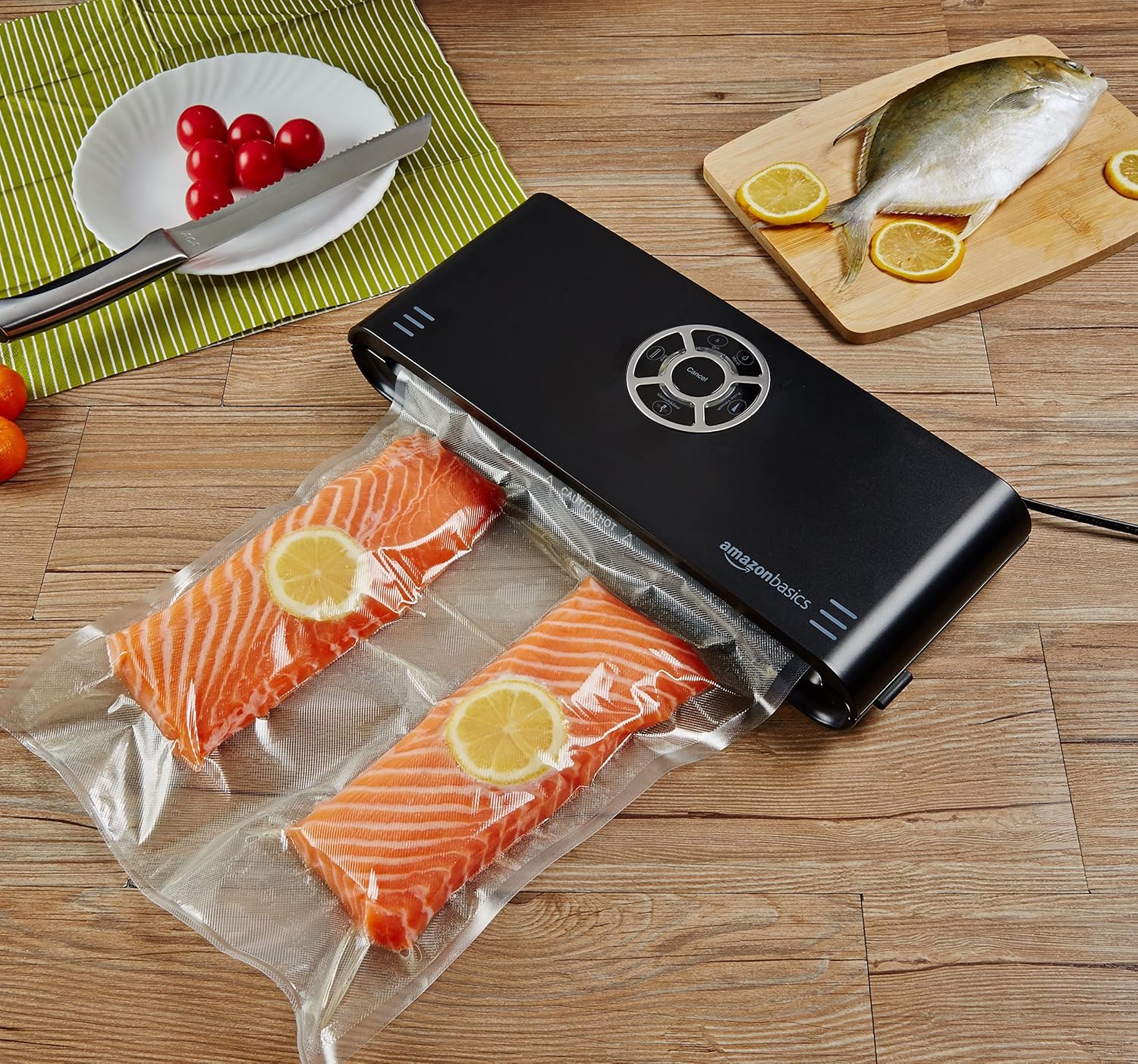
Imagem 6: Two salmon fillets vacuum-sealed in bags, ready for storage or cooking. This image illustrates the end result of the vacuum sealing process.
Manutenção
A manutenção adequada garante a longevidade e o desempenho ideal da sua seladora a vácuo.
- Limpeza:
- Desligue sempre o aparelho da tomada antes de limpá-lo.
- Limpe o exterior com adamp pano e sabão neutro. Não use produtos de limpeza abrasivos.
- Clean the vacuum channel and sealing strip after each use, especially if sealing moist foods. Use a damp cloth to remove any food residue. Ensure these areas are completely dry before next use.
- Não mergulhe o aparelho em água.
- Cuidados com a junta:
- Inspect the foam gaskets regularly for any signs of wear, tears, or deformation. Damaged gaskets can prevent a proper vacuum seal.
- Clean gaskets with a damp pano.
- Armazenar:
- Store the appliance with the lid unlatched to prevent compression of the gaskets, which can lead to permanent deformation and affect sealing performance.
- Armazene em local fresco e seco.
Solução de problemas
Se você encontrar problemas com sua seladora a vácuo, consulte os problemas comuns e suas soluções a seguir:
| Problema | Possível causa | Solução |
|---|---|---|
| A máquina não liga. | Não está conectado à tomada; mau funcionamento da tomada elétrica. | Certifique-se de que o cabo de alimentação esteja firmemente conectado a uma tomada em funcionamento. |
| A máquina aspira, mas não sela. | Bag not positioned correctly; sealing strip or gaskets dirty/damaged; bag material incompatible. |
|
| A máquina sela, mas não faz vácuo. | Lid not properly latched; gaskets dirty/damaged; bag not positioned correctly. |
|
| Após o fechamento da embalagem, entra ar. | Embalagem com vedação inadequada; furo na embalagem; alimento com bordas afiadas. |
|
| Bag melts during sealing. | Sealing time too long (rare for automatic machines); bag not suitable. |
|
Especificações
| Número do modelo | VS2320EU |
| Marca | Noções básicas sobre a Amazon |
| Dimensões (C x L x A) | 38 x 15.19 x 5.89 cm (14.96 x 5.98 x 2.32 polegadas) |
| Peso | 1.38 kg (3.04 libras) |
| Material | Plástico e Metal |
| Cor | Preto |
| Largura do Selo | 30 cm (11.8 polegadas) |
| Potência de vácuo | 90% at 0.8 bar |
| Seal Bar Thickness | 3 milímetros |
| País de origem | China |
| Características especiais | Powerful automatic vacuum system, Multiple operating modes (Dry/Moist/Pulse), Strong seal, Integrated bag cutter, Cord storage |
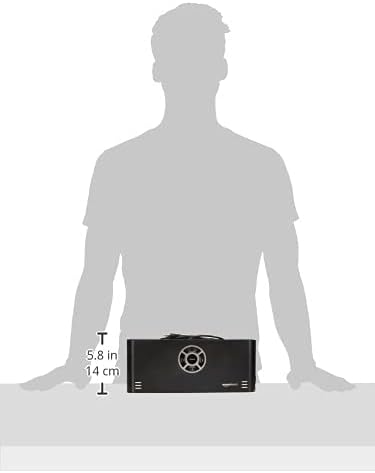
Imagem 7: Diagram illustrating the dimensions of the Amazon Basics Vacuum Sealer. The image shows the height of the machine as 5.8 inches (approximately 14.7 cm). Please note a slight discrepancy with the listed specification of 5.89 cm for height, which may be a typographical error in the source data.
Garantia e Suporte
Para informações sobre garantia e suporte ao cliente, consulte a documentação incluída na sua compra ou visite o site oficial da Amazon Basics. website.
Suporte online: For the most up-to-date information, FAQs, and contact options, please visit Atendimento ao cliente da Amazon.