
1. Produto acabadoview
This manual provides detailed instructions for the installation, operation, and maintenance of your Denash A78SD3 AM3 Motherboard. Please read this manual thoroughly before proceeding with installation to ensure correct setup and optimal performance.
Principais características
- Stable Power Design: Features a multi-phase power system for stable and optimal performance.
- Ampla Conectividade: Includes 4 USB 2.0 ports and 4 Serial ATA 3.0 ports for versatile peripheral and storage connections.
- Desempenho poderoso: Supports AM3 socket APU processors and 2-channel DDR3 memory up to 16GB.
- Immersive Visuals & Audio: Equipped with HDMI and VGA video outputs, 100Mbps Ethernet, and 5.1 channel sound.
- AmpOpções de armazenamento: 4 Serial ATA 3.0 ports accommodate high-capacity storage needs.

Figura 1.1: Overview of the Denash A78SD3 AM3 Motherboard. This image displays the full layout of the motherboard, including the CPU socket, memory slots, expansion slots, and various I/O ports.

Figure 1.2: Denash A78SD3 Motherboard with key components labeled. This image highlights the locations of the 24-pin ATX power connector, 2-channel DDR3 memory slots, SATA 2.0 ports, keyboard and mouse ports, HDMI, VGA, USB 2.0 ports, network port, sound output, 4-pin CPU power connector, and PCIe X16 slot.
2. Especificações técnicas
The following table details the technical specifications of the Denash A78SD3 Motherboard:
| Recurso | Especificação |
|---|---|
| Tipo de item | A78SD3 Computer Motherboard |
| Material | PCB |
| Chip da placa-mãe | Integrated Sound Card, Card with Integrated Graphics |
| Chipset principal | for RS780 Series |
| Card Chip | Integrated 100Mbps Ethernet |
| Chip de som | Integrated 6 Channel Sound Chip |
| Especificações do processador | Supports AM3 Interface for APU Processors |
| Soquete da CPU | AM3 |
| Supported CPU Quantity | 1 Piece (CPU Excluded) |
| Tipo de memória | DDR3 1600/1333/1066MHz |
| Slots de memória | 2 x DDR3 (Memory Excluded), Maximum supported 16GB (Maximum 8GB per stick) |
| Slots de expansão | 1 x PCI-E X16 Graphics Card Slot, 1 x COM Serial Port Header, 2 x USB 2.0 Headers, 4 x Serial ATA 3.0 Ports |
| Interfaces E / S | PS/2 (Keyboard/Mouse) x 1 Each, 1 x RJ45 Ethernet Port, 1 x VGA Port, 1 x High Definition Multimedia Interface Output, 4 x USB 2.0 Ports, Sound Interfaces |
| Tamanho da placa-mãe | Approx. 17x21.3cm / 6.7x8.4in |
| Tipo de Bateria | 1 x CR2032L Battery (Included) |
| Conectores de energia | 4 Pin and 24 Pin Power Connector |
| Modo de fornecimento de energia | 4 fase |
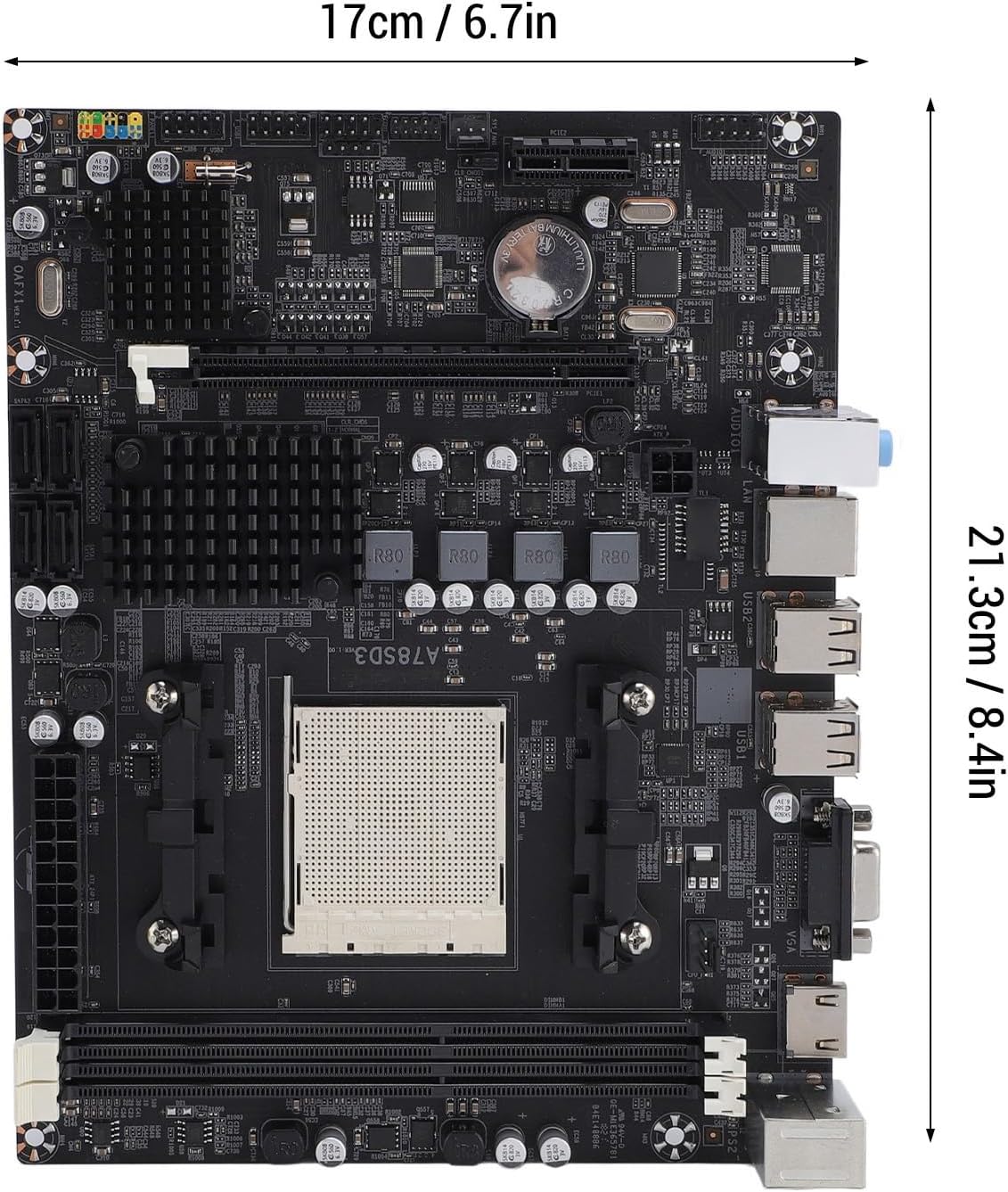
Figure 2.1: Dimensions of the Denash A78SD3 Motherboard. The image shows the motherboard measuring approximately 17cm (6.7in) in width and 21.3cm (8.4in) in length.
3. Instalação e configuração
Siga estes passos para instalar corretamente sua placa-mãe e componentes.
3.1 Instalação da CPU
- Localize o soquete AM3 da CPU na placa-mãe.
- Gently lift the load lever on the side of the socket.
- Align the triangular mark on your AM3 processor with the corresponding mark on the socket. Carefully place the CPU into the socket without forcing it.
- Lower the load lever back into its locked position to secure the CPU.
- Aplique pasta térmica na CPU e instale o cooler da CPU de acordo com as instruções do fabricante.
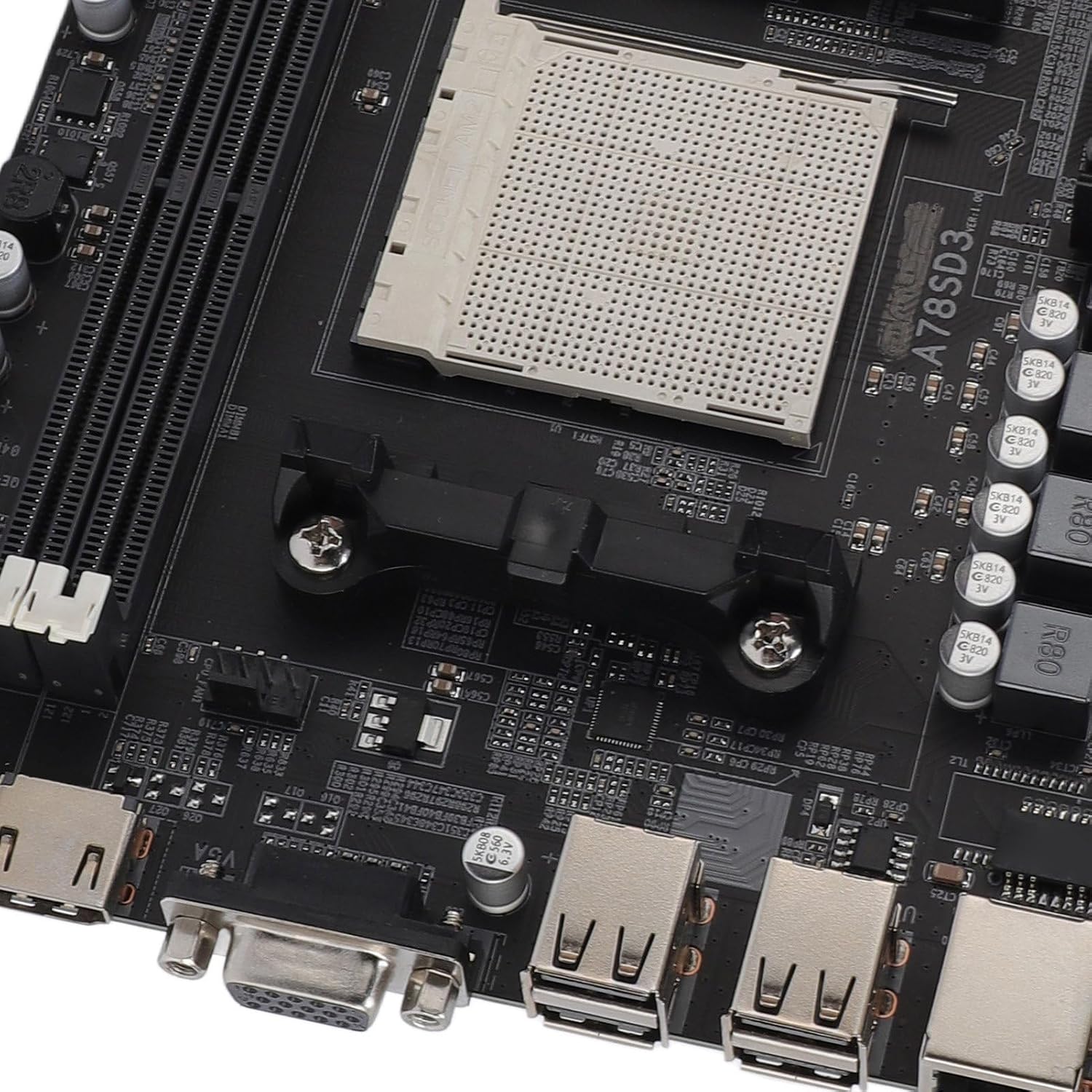
Figura 3.1: Close view of the AM3 CPU socket on the Denash A78SD3 Motherboard. This image shows the pin grid array (PGA) socket where the processor is installed.
3.2 Instalação da memória (RAM)
- Locate the two DDR3 memory slots.
- Abra as travas em ambas as extremidades do slot de memória.
- Alinhe o entalhe no módulo de memória DDR3 com a chave no slot de memória.
- Insira o módulo de memória firmemente no slot até que as travas se encaixem no lugar. Certifique-se de que ambas as travas estejam completamente fechadas.

Figura 3.2: Close view of the 2-channel DDR3 memory slots on the Denash A78SD3 Motherboard. This image highlights the slots where RAM modules are to be installed.
3.3 Conexão do dispositivo de armazenamento
- Locate the 4 Serial ATA 3.0 ports on the motherboard.
- Conecte uma extremidade do cabo de dados SATA a uma porta SATA na placa-mãe.
- Connect the other end of the SATA data cable to your storage device (HDD/SSD).
- Conecte um cabo de alimentação SATA da sua fonte de alimentação (PSU) ao dispositivo de armazenamento.
3.4 Conexões de energia
- Connect the 24-pin ATX main power connector from your PSU to the corresponding slot on the motherboard. Ensure it clicks into place.
- Connect the 4-pin CPU power connector from your PSU to the 4-pin power socket near the CPU.
3.5 Conexões Periféricas
- Saída de vídeo: Connect your monitor to either the VGA port or the HDMI port on the motherboard's I/O panel.
- Dispositivos USB: Conecte seu teclado, mouse e outros dispositivos USB às portas USB 2.0 disponíveis.
- Rede: Connect an Ethernet cable from your router or modem to the RJ45 Ethernet port for network access.
- Áudio: Connect speakers or headphones to the appropriate audio jacks on the I/O panel.
- Conectores do painel frontal: Connect the power switch, reset switch, power LED, HDD LED, and front panel audio/USB headers from your computer case to the corresponding pins on the motherboard. Refer to your case manual for specific pin assignments.

Figura 3.3: Close view of the I/O ports on the Denash A78SD3 Motherboard. This image shows the USB ports, VGA port, HDMI port, Ethernet port, and audio jacks.
4. Guia de operação
Once all components are installed and connected, you can proceed with system operation.
4.1 Initial System Startup
- Ensure all power cables are securely connected and the power supply is switched on.
- Pressione o botão liga/desliga no gabinete do seu computador.
- The system should power on, and you should see a display on your monitor.
4.2 Configuração da BIOS/UEFI
The BIOS (Basic Input/Output System) or UEFI (Unified Extensible Firmware Interface) is the firmware that initializes hardware during the booting process. To access the BIOS/UEFI setup utility:
- During system startup, repeatedly press the designated key (commonly DEL, F2, ou F10) as indicated on the screen.
- Within the BIOS/UEFI, you can configure boot order, system time, hardware settings, and more. Save changes before exiting.
4.3 Instalação do Sistema Operacional e dos Drivers
- Insira a mídia de instalação do sistema operacional (unidade USB ou DVD).
- Siga as instruções na tela para instalar o sistema operacional de sua preferência.
- After OS installation, install the necessary drivers for the motherboard components (chipset, audio, LAN, graphics) from the provided driver disc or the manufacturer's website.
5. Manutenção
A manutenção regular ajuda a garantir a longevidade e o desempenho estável da sua placa-mãe.
5.1 Limpeza
- Periodically clean dust from the motherboard and other internal components using compressed air.
- Certifique-se de que o sistema esteja desligado e desconectado da tomada antes de limpá-lo.
- Evite usar líquidos ou materiais abrasivos.
5.2 Atualizações do BIOS
BIOS updates can improve system stability, add support for new hardware, or fix bugs. Check the Denash support website for the latest BIOS versions and follow their instructions carefully. Incorrect BIOS updates can damage your motherboard.
5.3 CMOS Battery Replacement
The motherboard uses a CR2032L coin cell battery to retain BIOS settings and system time when the computer is off. If your system consistently loses time or BIOS settings, the battery may need replacement.
- Power off the computer and unplug it from the wall outlet.
- Locate the CR2032L battery on the motherboard.
- Gently pry the old battery out of its holder.
- Insert a new CR2032L battery with the positive (+) side facing up.
6. Solução De Problemas
Esta seção fornece soluções para problemas comuns que você pode encontrar.
6.1 No Power / System Does Not Turn On
- Check if the power supply unit (PSU) is properly connected to the wall outlet and switched on.
- Ensure the 24-pin and 4-pin power connectors are securely attached to the motherboard.
- Verifique se o cabo do interruptor de alimentação do painel frontal está conectado corretamente ao conector da placa-mãe.
- Teste a fonte de alimentação com outro sistema ou com um testador de fontes de alimentação, se disponível.
6.2 Sem imagem no monitor
- Ensure the monitor is powered on and the video cable (VGA or HDMI) is securely connected to both the monitor and the motherboard.
- If using a dedicated graphics card, ensure the monitor is connected to the graphics card's output, not the motherboard's integrated graphics ports.
- Reseat the memory modules. Incorrectly seated RAM is a common cause of no display.
- Check if the CPU is properly installed and the CPU cooler is functioning.
6.3 Peripherals Not Detected
- For USB devices, try connecting them to different USB ports.
- Ensure all necessary drivers for the motherboard and peripherals are installed.
- Check BIOS/UEFI settings to ensure USB ports or other relevant controllers are enabled.
- For SATA devices, ensure both data and power cables are securely connected.
6.4 Instabilidade/Travamentos do Sistema
- Check for overheating. Ensure CPU and case fans are working correctly and heatsinks are clean.
- Execute ferramentas de diagnóstico de memória para verificar se há módulos de RAM defeituosos.
- Certifique-se de que todos os motoristas estejam com a documentação em dia.
- Check the power supply unit for sufficient wattage and stability.
7. Garantia e Suporte
Denash products are designed for reliability and performance. For specific warranty terms and conditions, please refer to the warranty card included with your product or visit the official Denash website.
7.1 Suporte Técnico
If you encounter issues that cannot be resolved using this manual, please contact Denash customer support. Have your product model number (A78SD3) and purchase information ready when contacting support.
For the most up-to-date support information, including FAQs and driver downloads, please visit the official Denash support website.