1. Introdução
This document provides instructions for the Parkside High-Pressure Turbo Nozzle, an accessory designed for use with compatible Parkside pressure washers. This nozzle is engineered to deliver a powerful, rotating point jet for effective removal of stubborn dirt and grime.
This turbo nozzle is compatible with the following LIDL Parkside pressure washer models:
- PHD 150 G4 (IAN 305729)
- PHD 150 F4 (IAN 291639)
- PHD 170 A1 (IAN 327191)
- PHD 170 B2 (IAN 346400, IAN 378872, IAN 373932)
- PHD 170 C2 (IAN 373767)
2. Informações de segurança
Always observe the following safety precautions when using the high-pressure turbo nozzle:
- Always disconnect the pressure washer from the power supply before attaching or detaching any accessories.
- Ensure the nozzle is securely attached to the lance before operating the pressure washer.
- Do not direct the high-pressure jet at people, animals, electrical equipment, or the pressure washer itself.
- Wear appropriate personal protective equipment, including eye protection, during operation.
- Mantenha crianças e animais de estimação longe da área de trabalho.
- Do not use the nozzle if it is damaged.
3. Conteúdo da embalagem
O pacote normalmente inclui:
- 1 x Parkside High-Pressure Turbo Nozzle
4. Configuração e instalação
The turbo nozzle features a Quick-Connect system for easy and secure attachment to your compatible Parkside pressure washer lance.
- Preparação: Ensure your pressure washer is turned off and disconnected from the power supply. Release any residual pressure in the system by squeezing the trigger gun.
- Colocando o bico: Align the Quick-Connect end of the turbo nozzle with the Quick-Connect fitting on your pressure washer lance. Push the nozzle firmly into the fitting until you hear and feel a click, indicating it is securely locked in place. Gently pull on the nozzle to confirm it is properly seated and will not detach during operation.
- Detaching the Nozzle: To remove the nozzle, first ensure the pressure washer is off and depressurized. Pull back the collar on the Quick-Connect fitting on the lance, then pull the nozzle straight out from the fitting.
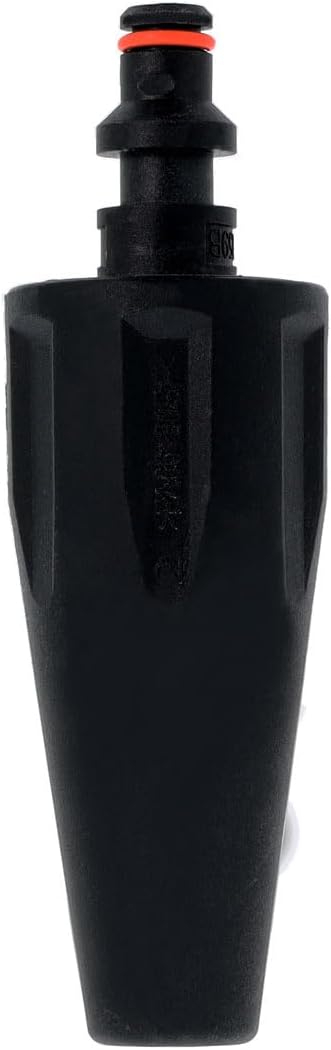
Imagem 1: Frente view of the Parkside High-Pressure Turbo Nozzle. This image shows the main body of the nozzle and the quick-connect attachment point.

Imagem 2: Angulada view of the Parkside High-Pressure Turbo Nozzle, highlighting the quick-connect mechanism at the base.
5. Instruções de operação
The turbo nozzle is designed for intensive cleaning tasks, utilizing a rotating jet to maximize cleaning power.
- Conecte à lavadora de alta pressão: Ensure the turbo nozzle is securely attached to the pressure washer lance as described in Section 4.
- Iniciar a lavadora de alta pressão: Follow the instructions in your pressure washer's manual to start the unit.
- Comece a limpeza: Hold the lance firmly with both hands. Direct the high-pressure jet towards the surface to be cleaned, maintaining a safe and effective distance (typically 15-30 cm, adjust as needed for the surface and dirt level).
- Limpeza eficaz: The rotating point jet is particularly effective for removing tough, caked-on dirt, moss, and grime from hard surfaces like concrete, paving, and stone. Move the nozzle steadily and systematically across the surface to ensure even cleaning.
- Eficiência da água: The design of the rotating jet allows for efficient cleaning with relatively low water consumption, making it suitable for tasks requiring powerful cleaning without excessive water use.
- Finalizar a limpeza: When finished, release the trigger, turn off the pressure washer, and disconnect it from the power supply. Depressurize the system before detaching the nozzle.
6. Manutenção
Proper maintenance ensures the longevity and optimal performance of your turbo nozzle.
- Limpeza: After each use, rinse the nozzle thoroughly with clean water to remove any dirt, debris, or chemical residues. This prevents blockages and corrosion.
- Inspeção: Periodically inspect the nozzle for any signs of wear, damage, or blockages. Check the O-ring on the Quick-Connect fitting for cracks or deterioration. A damaged O-ring can lead to leaks.
- Armazenar: Store the turbo nozzle in a clean, dry place, away from direct sunlight, frost, and extreme temperatures. Protect it from physical impact.
- Substituição: If the nozzle becomes damaged or its performance significantly degrades, replace it with an original Parkside spare part to ensure compatibility and safety.

Imagem 3: Topo view of the Parkside High-Pressure Turbo Nozzle, showing some product markings on the body.
7. Solução De Problemas
If you encounter issues with your turbo nozzle, consider the following:
- No Water Flow or Weak Jet: Ensure the nozzle is correctly and securely attached. Check for any blockages in the nozzle opening or the pressure washer's water inlet/filter. Verify that the pressure washer itself is functioning correctly and receiving adequate water supply.
- Leaking Connection: Confirm the nozzle is fully engaged in the Quick-Connect fitting. Inspect the O-ring for damage or wear; replace if necessary.
- No Rotating Action: The rotating mechanism might be obstructed by debris. Try rinsing the nozzle thoroughly. If the issue persists, the internal mechanism might be damaged, and the nozzle may need replacement.
For further troubleshooting, refer to the instruction manual of your specific Parkside pressure washer model or contact customer support.
8. Especificações
| Dimensões do produto (C x L x A) | 20 x 10 x 5 cm |
| Peso | 70 gramas |
| Material | Metal |
| Tipo de conexão | Conexão rápida |
| Compatible Pressure Washer Models | PHD 150 G4, PHD 150 F4, PHD 170 A1, PHD 170 B2, PHD 170 C2 Series |
| Fabricante | Ferramentas Grizzly |
9. Garantia e Suporte
For warranty information, details on spare parts, or technical support, please refer to the documentation provided with your original Parkside pressure washer or contact Parkside customer service directly. Keep your purchase receipt as proof of purchase.
You may also find additional support and information on the official Parkside webno local ou através de centros de serviço autorizados.


