1. Introdução
This manual provides essential information for the safe and efficient operation of your Anern 4200W Hybrid Solar Inverter. Please read this manual thoroughly before installation and use. Keep it for future reference.
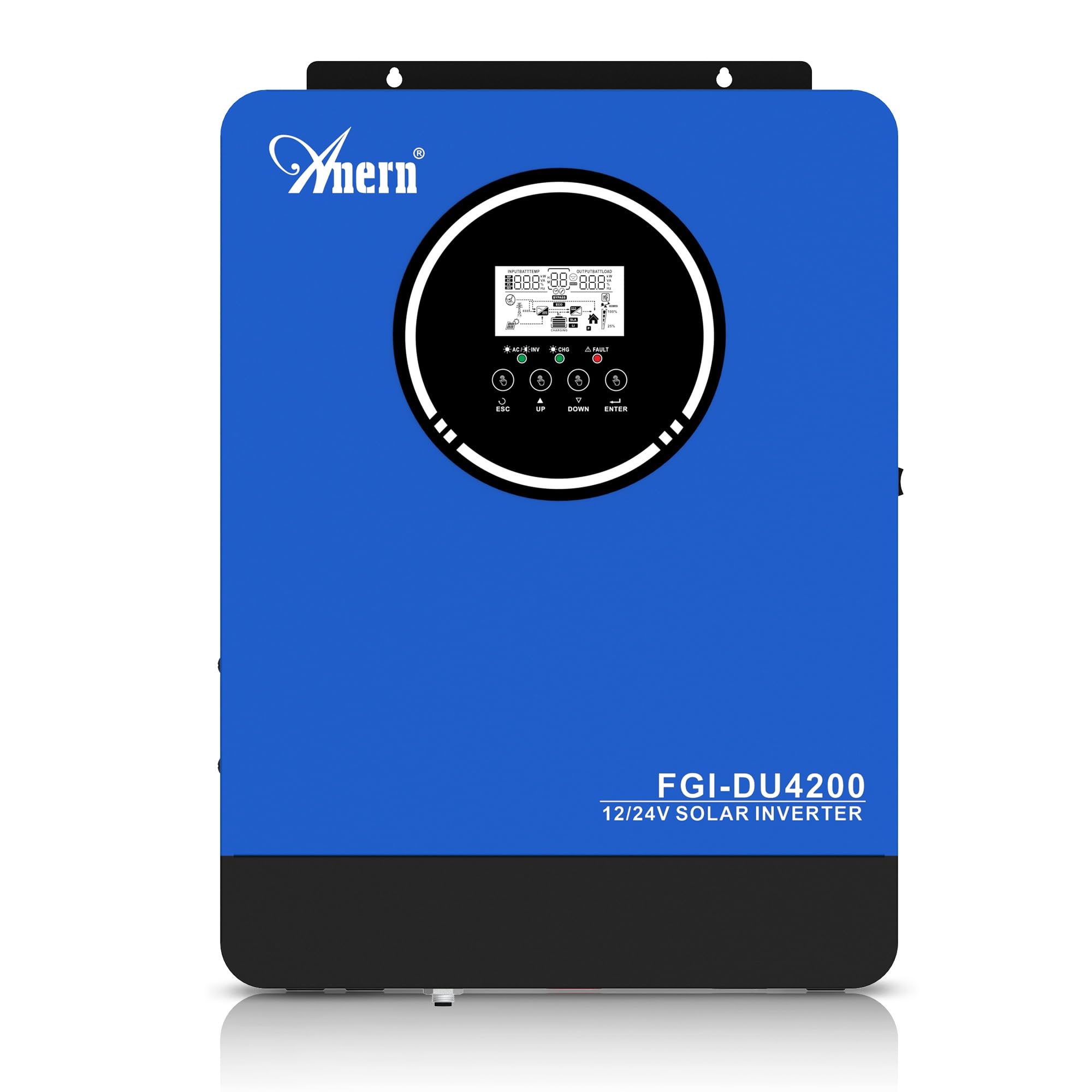
Figure 1: Anern 4200W Hybrid Solar Inverter. This image displays the main unit of the inverter, highlighting its key specifications such as 100A AC charging current, 4200W rated output power, and 500 VDC maximum PV array voltage.
2. Instruções de segurança
Observe sempre as seguintes precauções de segurança para reduzir o risco de choque elétrico, incêndio ou ferimentos:
- A instalação deve ser realizada por pessoal qualificado.
- Ensure all wiring is correctly connected and equipped with appropriate protective switches.
- Não desmonte o inversor. Não existem peças internas que possam ser reparadas pelo usuário.
- Evite expor o inversor à chuva, neve, respingos ou qualquer outro líquido.
- Garanta ventilação adequada ao redor do inversor para evitar superaquecimento.
- Disconnect all power sources (PV, battery, utility) before performing any maintenance or wiring.
3. Produto acabadoview
The Anern 4200W Hybrid Solar Inverter is designed to convert DC power from solar panels and batteries into AC power for household use. It features an integrated 100A MPPT solar charge controller and supports both 12V and 24V battery systems with automatic detection.
Principais características:
- Saída de onda senoidal pura de 4200 W: Provides stable and clean power for sensitive electronics.
- 100A MPPT Solar Charge Controller: Maximizes power harvest from solar panels.
- 12V/24V Battery Auto-Detection: Automatically adjusts output based on connected battery voltage.
- BMS Interface: Supports communication with lithium batteries for enhanced monitoring and protection.
- Real-time LED Display: Shows system status, operating data, and error codes.
- Configurable Charging & Output Modes: Offers flexibility for various application needs.
- Optional WiFi/GPRS Monitoring: Remote monitoring capability (module sold separately).

Figure 2: Inverter Display and Controls. This image illustrates the inverter's LCD display, function buttons for configuration, and the optional WiFi module for remote monitoring.
4. Configuração e instalação
4.1 Diagrama de fiação
Refer to the electrical schematic for proper system wiring. Ensure all connections are secure and correctly polarized.

Figure 3: Electrical Schematic. This diagram shows the complete wiring for a solar inverter system, including solar panels, combiner box, DC/AC breakers, inverter, utility grid connection, and loads.
4.2 Conexão da Bateria
The inverter supports 12V and 24V battery configurations. It automatically detects the battery voltage and adjusts its output accordingly (2300W for 12V, 4200W for 24V). For 24V systems, connect two 12V batteries in series. For 12V systems, connect batteries in parallel if increasincapacidade g.

Figure 4: Battery Connection Options. This image illustrates how to connect batteries for 12V (parallel connection for 2300W output) and 24V (series connection for 4200W output) systems.
The inverter also supports lithium batteries and includes a BMS (Battery Management System) interface for monitoring and protection. Ensure the BMS is properly connected if using lithium batteries.

Figure 5: Communication Interfaces. This image highlights the dual communication interfaces for BMS (Battery Management System) and optional WiFi module, enabling remote monitoring and battery communication.
4.3 Startup and Shutdown Sequence
Sequência de inicialização:
- Conecte a bateria.
- Ligue o inversor.
- Activate the protective switches for PV, Utility, and Loads.
Sequência de desligamento:
- Deactivate the protective switches for Loads, Utility, and PV.
- Desligue o inversor.
- Desconecte a bateria.
Important Note: Inductive loads (e.g., motors, refrigerators) may require up to 3 times their rated power for startup. Ensure the inverter's capacity is sufficient to handle these surge loads. Exceeding the inverter's surge capacity can cause damage.
5. Operação
Tela LCD de 5.1 polegadas e configurações
The inverter features an LED display that provides real-time system data and operating status. Use the function buttons below the display to navigate menus and configure settings. Settings include battery charging current, AC/solar charging priority, and charging current priority.
5.2 modos de carregamento
The inverter offers four configurable charging modes:
- Prioridade à energia solar: A energia solar tem prioridade no carregamento.
- Somente Solar: Only solar power is used for charging.
- Prioridade de serviço público: Utility grid power is prioritized for charging.
- Solar + Utility Hybrid: Combina energia solar e da rede elétrica para carregamento.
5.3 Modos de Saída
Three output modes are available to adapt to various application needs:
- Prioridade Solar (SUB): Solar power is prioritized for loads.
- Prioridade de utilidade (USB): Utility grid power is prioritized for loads.
- SBU: Solar, Battery, Utility priority.

Figure 6: Charging and Output Modes. This diagram visually explains the four available charging modes (Solar Charge, Utility Priority, Solar Priority, Hybrid Charge) and three load output modes (PV Priority, Utility Priority, SBU Priority).
5.4 Monitoramento Remoto
The inverter supports remote monitoring via an optional WiFi/GPRS module (sold separately). This allows users to monitor system performance and status from a distance.
6. Manutenção
A manutenção regular garante o desempenho ideal e a longevidade do seu inversor:
- Mantenha o inversor limpo e livre de poeira. Use um pano seco para a limpeza.
- Certifique-se de que as aberturas de ventilação não estejam bloqueadas.
- Verifique periodicamente se todas as conexões da fiação estão bem apertadas e se há sinais de corrosão.
- Monitor the battery status, especially if using lithium batteries with the BMS interface, to prevent overcharge or deep discharge.
- Inspect solar panels for dirt or damage that could reduce efficiency.
7. Solução De Problemas
The LED display will show error codes if issues arise. Refer to the inverter's display for specific error codes to diagnose and resolve problems. Common issues and their potential solutions include:
- Sem saída de energia: Check battery connections, DC/AC breakers, and inverter power switch.
- Volume de Bateria Baixotage: Ensure batteries are adequately charged. Check charging sources (solar, utility).
- Aviso de sobrecarga: Reduce the connected load. Inductive loads may cause temporary overloads during startup.
- Superaquecimento: Ensure proper ventilation. Clean any dust from the inverter's vents.
- PV Input Error: Check solar panel connections and voltage. Ensure PV array voltage está dentro da faixa especificada (55-500 V CC).
For persistent issues or error codes not listed, contact customer support.
8. Especificações técnicas
| Recurso | Especificação |
|---|---|
| Marca | Anern |
| Número do modelo | AN-FGI-DU 4200 |
| Energia elétrica | 4200 Watts |
| Potência de saída | 4500 Watts |
| Max. Output Power (Watts) | 4200 |
| Forma de onda de saída | Pure Sine Wave |
| Fonte de energia | Alimentado por energia solar, alimentado por bateria |
| Usos recomendados do produto | Lar |
| Componentes incluídos | Manual de instruções |
| Conformidade | CE |
| Dimensões do produto | 30 x 10 x 40 cm; 8.86 kg |
9. Garantia e Suporte
For warranty information and technical support, please refer to the documentation provided with your purchase or contact Anern customer service. Keep your purchase receipt as proof of purchase.


